The creation of writing is a fascinating and complex process that has played a crucial role in human history. Writing has been used for thousands of years to record and convey ideas, thoughts, and experiences, and has shaped the way we communicate, preserve knowledge, and transmit cultural values from one generation to the next.
The origins of writing are still a subject of much debate among scholars and historians, but it is widely believed that the first written records were created over 5,000 years ago, in ancient civilizations such as Sumer in Mesopotamia and Egypt. These early forms of writing were used primarily to record economic transactions, such as the storage of grain and other goods, and to keep track of legal and religious records.
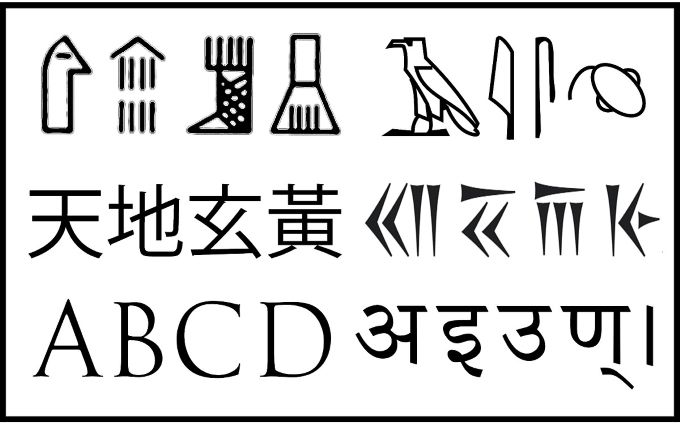
The earliest forms of writing were known as pictographs, in which symbols and pictures were used to represent objects, people, and events. Over time, these pictographs evolved into more abstract symbols, known as cuneiform, which were used to represent words and ideas. This type of writing was widely used in Mesopotamia and was instrumental in the development of the world’s first cities and civilizations.
In ancient Egypt, the development of writing was similarly driven by economic and administrative needs. The Egyptians developed a writing system known as hieroglyphics, which used pictorial symbols to represent words and ideas. Hieroglyphics were used to record laws, religious texts, and historical events, and were central to the development of Egyptian civilization and culture.
One of the most important innovations in the history of writing was the development of the alphabet, which was first used by the ancient Phoenicians. The alphabet was a more efficient and flexible system of writing that used a small number of symbols, or letters, to represent sounds and words. This made it much easier to learn how to read and write, and it allowed for the creation of more complex texts, such as poetry, prose, and religious texts.
The alphabet was widely adopted throughout the ancient world and was used by the Greeks and Romans to create some of the most famous works of literature and science in Western history. The Greek alphabet, for example, was used to create works such as the Iliad and the Odyssey, which remain central to Western literature and culture to this day.
The invention of the printing press in the 15th century was another major turning point in the history of writing. The printing press made it possible to mass-produce books and other written materials, which made information more widely available to the public. This led to a huge expansion in the field of knowledge and education, as books and other written materials became more widely accessible to people of all classes and backgrounds.
The invention of computers and the Internet in the 20th century has once again revolutionized the way we communicate and preserve knowledge. The widespread use of computers and the Internet has made it easier than ever to create, share, and access information and ideas, and has made writing more widely available than ever before.
the creation of writing has been a long and complex process that has shaped human history in countless ways. From the earliest forms of pictographs and cuneiform, to the invention of the alphabet, the printing press, and the Internet, writing has played a crucial role in the development of human civilization and continues to be a vital tool for communication, education, and the preservation of knowledge.