The rise of ancient Mesopotamia, located in present-day Iraq, was one of the most important events in the history of civilization. This region, known as the “cradle of civilization,” saw the development of the world’s first cities and the growth of a sophisticated culture that would have a profound impact on the world.
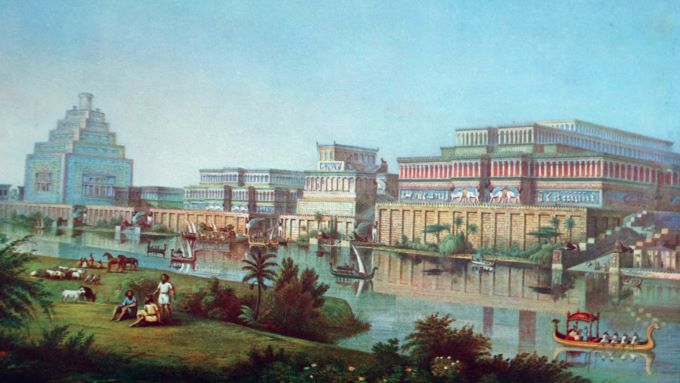
The origins of Mesopotamian civilization can be traced back to the 4th millennium BCE, when the region saw the rise of the first cities and the development of a system of writing. These early cities, such as Ur, Uruk, and Lagash, were characterized by monumental architecture, sophisticated systems of government, and the growth of trade and commerce.
One of the key factors that contributed to the rise of Mesopotamia was its geography. The region was situated between the Tigris and Euphrates rivers, which provided a rich source of water for agriculture and made it possible to support a large population. The rivers also provided a convenient transportation route for goods and people, which facilitated trade and commerce.
The invention of the wheel and the plow in the 4th millennium BCE also played a key role in the rise of Mesopotamia. These innovations made it possible to cultivate large areas of land, which allowed for the growth of agriculture and the expansion of the population. The rise of agriculture also made it possible to support the growth of specialized crafts and trades, which in turn led to the development of a complex economy.
Another factor that contributed to the rise of Mesopotamia was the development of a system of writing. The earliest form of writing in Mesopotamia was known as cuneiform, which used wedge-shaped symbols to represent words and ideas. This system of writing was used to record laws, religious texts, and historical events, and was instrumental in the development of the world’s first cities and civilizations.
The growth of trade and commerce also played a crucial role in the rise of Mesopotamia. The region was well-positioned at the crossroads of major trade routes, which made it possible to trade goods and ideas with other civilizations in the ancient world. The Mesopotamians traded with civilizations such as the Egyptians, the Indus Valley, and the Persians, and this trade helped to enrich their culture and spur technological innovations.
One of the most significant events in the rise of Mesopotamia was the rise of the Akkadian Empire in the 24th century BCE. The Akkadian Empire, under the rule of Sargon of Akkad, was the world’s first empire and marked a major turning point in the history of Mesopotamia. Sargon of Akkad conquered a large portion of the ancient world, including the Sumerian city-states, and established a central government that would shape the region for centuries to come.
The Akkadian Empire was followed by several other powerful civilizations, including the Babylonian Empire, the Assyrian Empire, and the Neo-Babylonian Empire, which would continue to shape the region for thousands of years. These empires were characterized by their sophisticated systems of government, monumental architecture, and rich cultural heritage, and left a lasting legacy in the region.
The rise of ancient Mesopotamia had a profound impact on the world, and many of the innovations and ideas that originated in the region continue to influence the modern world. The invention of writing, the growth of agriculture and commerce, the rise of the first cities and empires, and the development of a rich cultural heritage all helped to shape the course of human history and make Mesopotamia one of the most important regions in the ancient world.