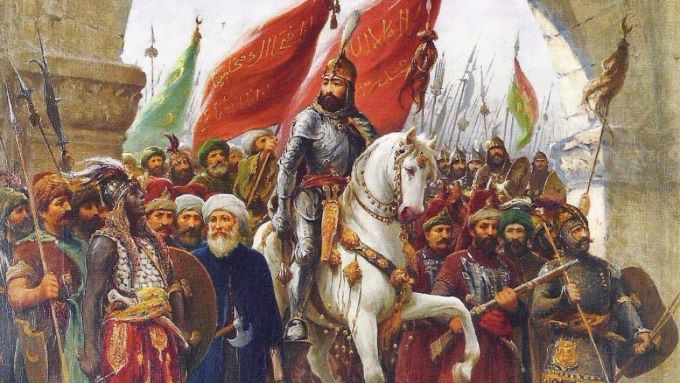
The rise of the Byzantine Empire marked a significant turning point in the history of the ancient world. Originating as the eastern half of the Roman Empire, the Byzantine Empire went on to become one of the longest-lasting and most influential empires in history.
The Byzantine Empire was established in the 5th century CE, after the fall of the Western Roman Empire, when the eastern half of the empire was ruled from Constantinople, the former capital of the Roman Empire. Under the leadership of its first emperor, Constantine the Great, the Byzantine Empire became a major center of power and culture, and it went on to endure for over a thousand years.
One of the key factors in the rise of the Byzantine Empire was its strategic location. Constantinople was located at the crossroads of Europe, Asia, and Africa, making it an ideal center of trade and commerce. This position also enabled the empire to control the flow of goods and ideas between the West and the East, and to influence the development of cultures and civilizations throughout the ancient world.

The Byzantine Empire was also characterized by its religious and cultural diversity. The empire was home to people of many different ethnicities and religions, including Christians, Jews, and Muslims. Despite its diversity, the empire was held together by a strong sense of unity and a shared cultural identity, and it went on to become one of the most influential centers of Christianity in the ancient world.
Throughout its history, the Byzantine Empire faced numerous challenges and invasions from neighboring powers. However, it also made important contributions to the fields of art, science, and religion, and it left a lasting impact on the world. For example, the Byzantines were responsible for preserving the works of classical Greek and Roman authors, and they made significant contributions to the development of religious, philosophical, and scientific thought.

The Byzantine Empire was also known for its political and military prowess. The Byzantines developed a powerful army, which they used to defend the empire against invaders, and they established a sophisticated system of government that was characterized by its stability and efficiency. This system of government went on to influence the development of later empires, and it remains an important legacy of the Byzantine Empire to this day.
Despite its many achievements, the Byzantine Empire faced significant challenges in the later years of its history. In the 13th and 14th centuries, the empire was weakened by internal political struggles, economic hardships, and invasions from neighboring powers. However, despite these challenges, the Byzantine Empire managed to endure for over a thousand years, and it remains an important part of the world’s cultural heritage to this day.

The rise of the Byzantine Empire marked a significant turning point in the history of the ancient world. From its humble beginnings as the eastern half of the Roman Empire, the Byzantine Empire went on to become one of the longest-lasting and most influential empires in history, and it left a lasting impact on the world through its contributions to art, science, religion, and government. Despite its many challenges, the Byzantine Empire managed to endure for over a thousand years, and it remains an important part of the world’s cultural heritage to this day.