The Renaissance was a cultural and intellectual movement that took place in Europe from the 14th to the 17th century. It was a time of great change, marked by a revival of learning, the development of new ideas, and the creation of some of the greatest works of art and literature in human history.
The Renaissance was born in Italy, where a revival of interest in the classical civilizations of Greece and Rome led to a new appreciation for the arts and sciences. This revival was fueled by the growth of cities, the rise of a wealthy merchant class, and the patronage of wealthy patrons, such as the Medici family in Florence.
During the Renaissance, new ideas and knowledge from the ancient world were rediscovered and studied. This led to a renewed appreciation for the beauty and value of human life, as well as a renewed interest in the natural world. The Renaissance saw the development of new scientific ideas, including the works of Galileo Galilei and Nicolaus Copernicus, which challenged the prevailing Aristotelian view of the universe and laid the foundation for the scientific revolution of the 17th century.
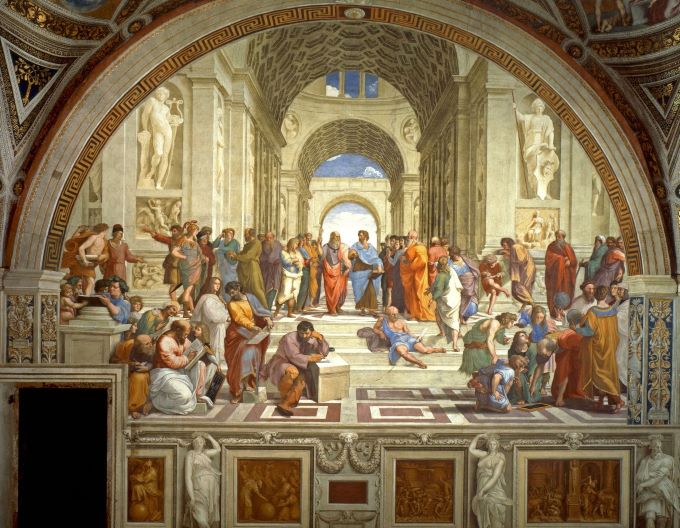
In the arts, the Renaissance was marked by a new style of painting, sculpture, and architecture, which emphasized realism and the beauty of the human form. Artists such as Leonardo da Vinci, Michelangelo, and Raphael produced some of the greatest works of art in human history, including the Mona Lisa, the Sistine Chapel ceiling, and the School of Athens.

The Renaissance also had a profound impact on literature. The invention of the printing press in the mid-15th century made it possible to spread ideas and knowledge more widely, and many great works of literature, including the plays of William Shakespeare and the poems of Dante Alighieri, were produced during this time.
In addition to its artistic and intellectual achievements, the Renaissance also marked a turning point in European history. It was a time of great change and transformation, as new ideas and knowledge challenged the prevailing social and political order. The Renaissance saw the rise of individualism, the growth of humanism, and the development of new ideas about the rights and freedoms of individuals.

The Renaissance also played a key role in the formation of the modern world. The ideas and discoveries of the Renaissance helped lay the foundation for the scientific revolution, the Enlightenment, and the modern world as we know it today. The Renaissance inspired people to think critically, to question traditional ideas, and to seek out new knowledge and understanding.
The Renaissance was a time of great change and transformation in Europe. It was a cultural and intellectual movement that was marked by a revival of learning, the development of new ideas, and the creation of some of the greatest works of art and literature in human history. The Renaissance had a profound impact on European history, inspiring new ideas about individualism and human rights and laying the foundation for the scientific revolution and the modern world as we know it today. The achievements of the Renaissance serve as a testament to the power of the human spirit to create, to discover, and to transform the world around us.